Periodic reports and charters on Sustainable Development Goals
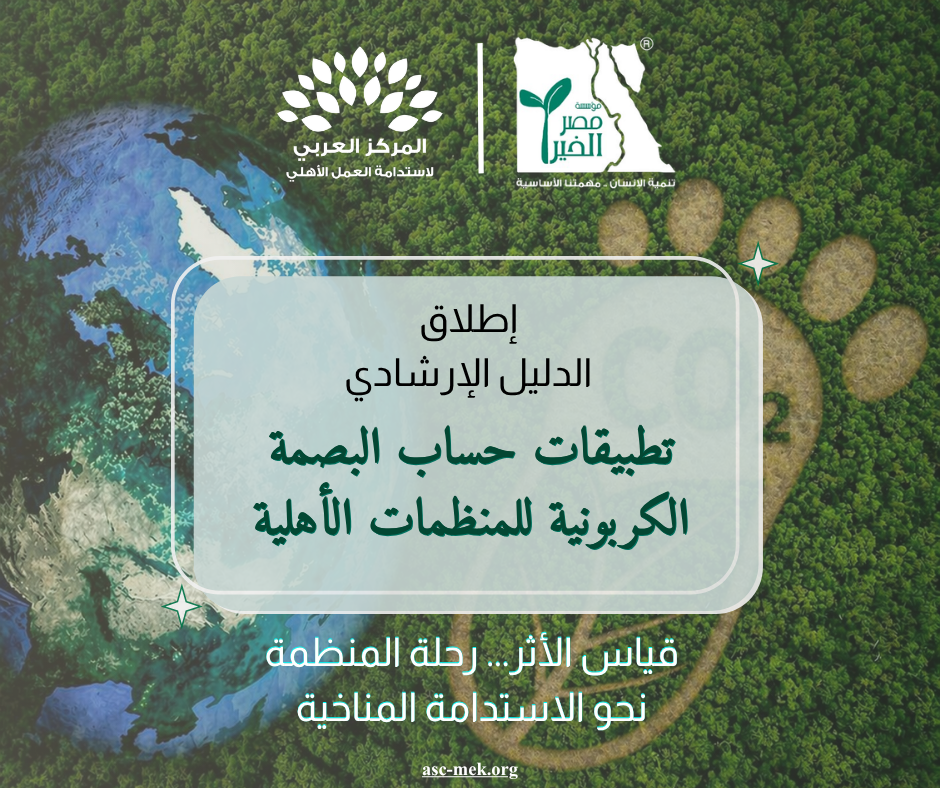
Guide to “Applications for Calculating the Carbon Footprint of NGOs”
Report Details
Click here to view the full report
Guideline "Applications for Calculating the Carbon Footprint of Non-Governmental Organizations": Measuring Impact...The Organization's Journey towards Climate Sustainability.
This guide comes at a time when the world is facing an accelerating “climate emergency,” as climate change is no longer just an environmental issue, but has become a major determinant of development paths and the rights of future generations. This guide is the first integrated scientific and applied reference that seeks to enable Arab NGOs to manage their internal environmental impact and align their operations with national and international climate goals
Why this guide? The guide aims to transform environmental commitment from a theoretical framework into concrete implementation plans that contribute to:
- Building Institutional Awareness: Understanding the relationship between civil society work and crisis Climate.
- Enabling practical application: Providing simplified steps and methodologies for measuring Carbon footprint according to international standards.
- Maximize credibility: Support organizations' ability to provide reliable reports to funders and partners International organizations in light of the trend towards green finance .
- National Contribution: Supporting the National Climate Change Strategy 2050 and Egypt's vision 2030.
What will you find in this guide? The guide consists of 7 doors Covers all aspects of corporate climate action:
- Carbon footprint concepts and scientific principles.
- Practical steps to measure emissions within the organization.
- Building a strategic plan to reduce your carbon footprint.
- Community impact and awareness mechanisms.
- Management challenges and ways to address them.
- Ready-to-use application tools and templates.
- A roadmap for periodic follow-up and impact evaluation.
Target group: NGOs (large, medium and small), manufacturers Institutional decision-making, field teams, and donors interested in sustainability.